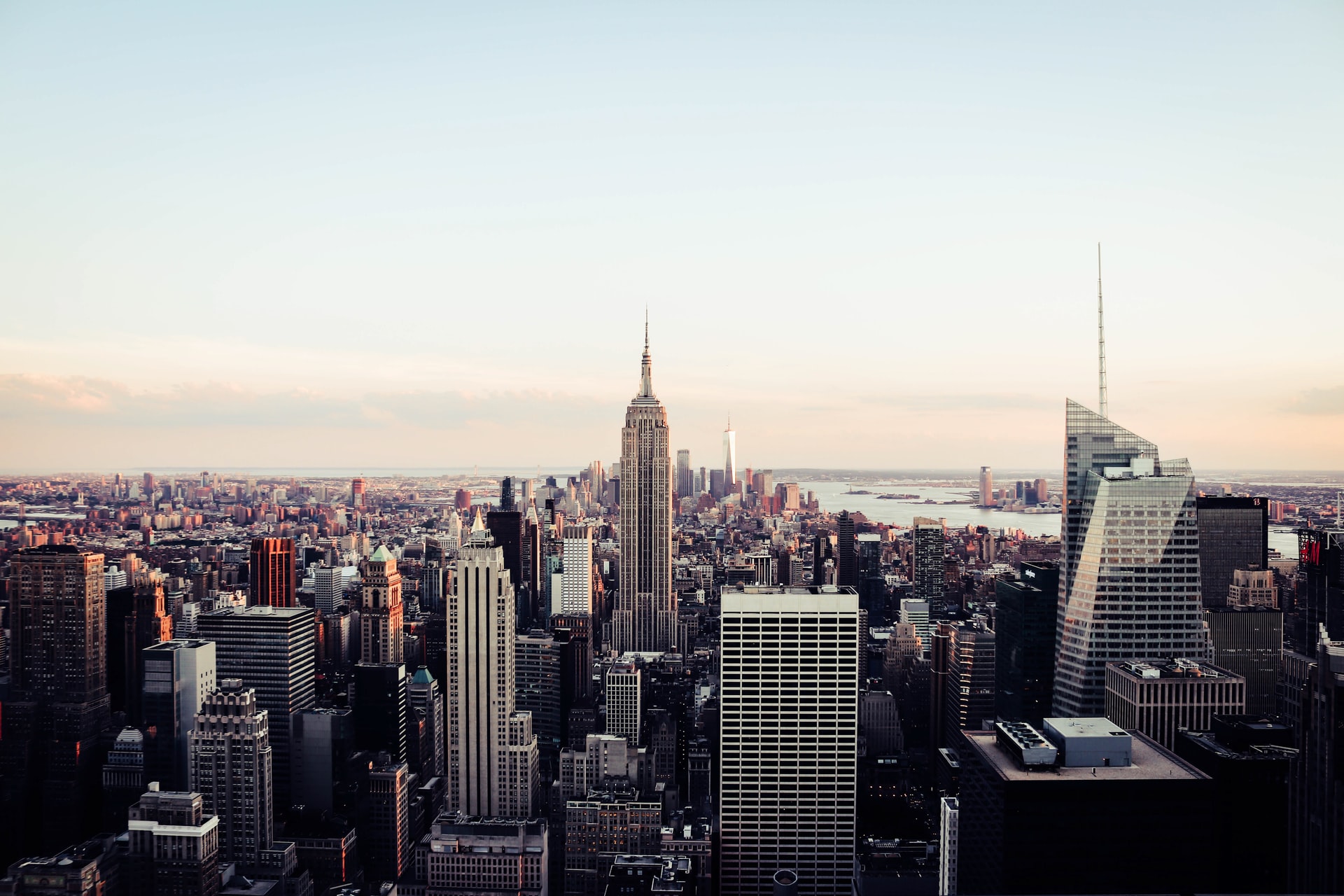
*Disclaimer: The following review is based on the author’s understanding of the book. The book has so much to offer that this review may not sufficiently justify its true extent. However, I have tried to make up for it with the choice for cover picture depicting the iconic view of New York, the epitome of urbanization.
Right time and right place, are perhaps the most important ingredients of a million dollar idea. And if you have read Outliers, you are familiar with the significance of timing cited through extraordinary historical events. Quite similarly this book describes in great detail about things that make a place right for a particular purpose. Why New York and London are so attractive to black suits, Silicon Valley is so desirable to the elite and Boston lacks the business of innovations that its universities germinate!
If you have read both the books, you can perhaps predict historical success with some certainty. For instance, someone with ancestors who migrated and started a textile business in New York during 1880s has greater odds of being among the top five percent compared to anyone with ancestors who stayed back until the post world war boom. If this sounds too far fetched, you can superimpose it to migration – success patterns in your own country! And if you have read the Black Swan, you can argue that such prediction is only possible because things have already occurred!
Urbanization has been the epicenter of human civilization ever since we started communicating. Whether it was the exchange of ideas through cave paintings or memos flying around open office floors. Human evolution has occurred at the pace of idea exchange that cities facilitate. Put a group of nerds in a dorm and you get Google, and Facebook. Now imagine this at a much larger scale, when you put thousands or perhaps hundreds of thousands of smart, if not extremely intelligent, people together!
Hence majority of the human evolution can be attributed to urbanization, whether the evolution has facilitated urbanization or improved human life in general. Innovations, ranging from the Roman Siphon that transported water to the Hyperloop that moves people around urban centers, have facilitated urbanization. While innovations ranging from ready-made garments to dot-com bubble have evolved our species.
Although urbanization may have originally been a product of convenience, today it is largely driven by consumerism. Primitively humans lived in herds to reduce risks from jungle predators and ensure continuity of our race. Whereas, in urban context, it was about convenience and affordability that arise out of shared amenities. For instance, neither the inconvenience of a dozen people is compelling enough to build the Roman Aqueduct nor the time loss of few hundred people is viable enough to sanction the Rapid Transit Corridor.
Despite the benefits, there are numerous inconveniences of urban life including the evenings spent on packed Sheikh Zayed Road when you stop admiring the skyscrapers or the premium tax bill for your upper Manhattan address. Hence there has to be another X-factor, or perhaps the binding agent, that makes people stick! This makes a sweet spot for urban pleasures as urban density makes it viable for the commoners to enjoy the otherwise Royal pleasures. Perhaps, sipping a glass of overpriced gin and tonic while overlooking the Marine Drive gets everyone intoxicated enough to discount the struggles of urban life.
Nevertheless, despite all such contribution cities have had their fair share of gloomy days. Although many cities that we know today have overcome multiple patches of rough weather, some have failed to regain past glory or even survive altogether. When the economy of a city collapses, the effects are a in multiple, if not exponential, compared to the despairing fate of single industry towns. Despite such vast and prolonged effects many cities including New York, London and Dubai have successfully overcome the turbulence, while some cities such as Kolkata, Detroit, and Cairo are cherishing their former glory days.
Since education germinates ideas that lead to innovations and subsequently realize in to revenue generating taxable businesses that employ too many smart people, universities have often been the emerging as well as reincarnating factors for cities. For instance, Boston! And of course London, Ahmedabad, Addis Abeba, and more. But unless the urban environment of the city offers enough leverage to retain the talent, the turnaround success may not be as astonishing as expected. Unlike the oblivion of Dubai or subtle seduction of London, Boston and Ahmedabad fail to retain the talent, failing to subsequently en-cash upon the ideas!
Whether the driving factor for success or catalyst to rejuvenation, each has had its unique means. Just as Zero to One emphasizes that each innovation is unique and can happen only once, so does this book in the context of cities. Although the textile revolution traveled from Manchester to across the globe including New York, Cairo, Ahmedabad, Dhaka and Hanoi, owing to contextual factors each resulted in an unique domino effect. While successful cities have a unique success stories, failing cities almost always show similar trends. Whether the coal mine dependent small town or car factory dependent Detroit, today’s corrupt bureaucracies of Asia and Africa or early 20th century corruption in New York, and the failure to make talent stick to boring cities or lawlessness that repels talent.
The textile looms took half a century to travel from Britain to India, but the dot-com from Santa Clara rushed to Bangalore with half a decade. As we globalized, the impact of urbanization also globalized. With intensified movement of people and goods, the aspiring cities of developing countries started to replicate the western success more rapidly. As urbanization is glittery on the surface, the adopters also unknowingly adopted the problems and downsides of urbanization. However, given the drastic advantages of urbanization such as a tanking economy or elimination of poverty through urban migration, such problems seem to the be minor inconveniences.
And as the urban authorities strive to remedy the teething problems of water supply and hygiene that had even bothered the cities of London and New York about a century ago, the world is entering into yet another crisis that maybe a by-product or urban and industrial development. As we built urban spaces, our perception of green spaces developed contrary to the facts. Although density meant more economic resource management and subsequent carbon emissions, the seduction of green suburbs perhaps blurred our thoughts.
Now as the west learns about the inefficiencies of car friendly suburbs, the resource deprived Gulf creates its paradise cities centered around car. And now as the west tries to persuade India and China against following the trend, while continuing their preference for Houston model, the attempt seems to be nothing more than the hypocrisy of the rich.
The modest European approach to urbanization may seem like the key to sustainable urban policy for India, China and Brazil. However, since the population in these developing countries is few folds of that in Europe, blind adoption without contextual remedies may create more problems than it solves. For instance, the archaic height regulations of India, which is just another British legacy, has forced cities such as Mumbai and Kolkata to expand rather than to get high! Moving people has monetary and carbon costs, whether it is frugal Mumbai local or flashy NCR traffic.
As green cities limit expansion, brown cities invite the unwelcome and we are greeted by the double edged crux of policy making. Whether the tax paid by car drivers should be used to build more highways that incentivize car ownership or improve public transport that discourages car ownership; whether the higher tax collected from urban districts be used towards urban development or rural uplift; whether the iconic relics of the past be preserved at the cost of opportunities for future generations; and whether certain cities be allowed to stay green or emit more at the cost of others!
Although the answers are apparent to economists, turns out not everyone thinks as rationally as Economists. After all, we are predictably irrational!
Arguments regarding the choice of cover picture are welcome. Although Dubai, Singapore, Tokyo, and London were among the options, owing to the advantages resulting from their unique conditions, I considered New York to be a far more tenacious choice to convey the essence of urbanization in its entirety.
Header Image Photo by Oliver Niblett on Unsplash
 Savvy Munshi